Ceiling Leak Detection in Torrance: Find the Source First
The stain is rarely right under the leak. We find where the water is really coming from before anyone cuts or paints.
Why isn’t the leak right above the stain?
Water runs along joists, pipes and drywall before it drips.
Call (424) 390-0246Free inspection · Emergency line 24/7
So the stain often shows up feet away from the real source. We trace it with moisture meters and thermal imaging before cutting anything.
Key points
- 1Common sources are roofs, bathrooms, AC drain lines and supply pipes.
- 2Finding the source first prevents repeat repairs.
- 3Small inspection holes are closed up as part of the repair.
Why the Stain Is Rarely Above the Leak
Good ceiling leak detection starts with one simple fact. Water travels. It runs along joists, pipes and roof rafters, then drops wherever it finds a low spot.
That’s why a stain in the hallway can come from a bathroom ten feet away. Or from an attic AC unit on the other side of the house. Patch the stain without finding the source, and it comes back. Usually within weeks.
Most Torrance homes sit on concrete slabs. With no basement below, leaks from roofs, attics and upstairs rooms end up in your ceiling. Condo and townhome ceilings add another layer, because the source may be in a neighbor’s unit.
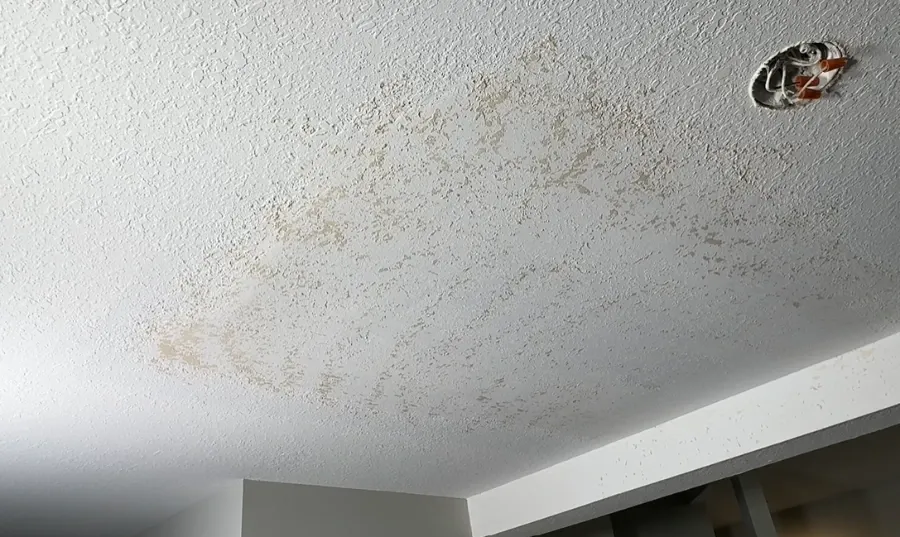
Hidden damp spots can feed mold, as the EPA moisture guide explains. That is why we measure before we cut.
How to Find a Ceiling Leak Yourself First
You can narrow it down before anyone comes out. These checks are safe, free and surprisingly useful.
- Notice the timing. Does the stain grow after rain, after showers, or on hot days when the AC runs? Timing is often the fastest way to find a ceiling leak.
- Look at what’s above. Is there a bathroom, laundry, water heater or attic air handler over the stain?
- Try the water meter test. Turn off every fixture and appliance. Then watch your water meter for 30 minutes. If the dial or leak indicator moves, water is escaping somewhere.
- Test the toilet. Put a few drops of food coloring in the tank. If color shows up in the bowl without flushing, the flapper leaks. A stain below the toilet may point to the wax ring instead.
- Run one fixture at a time. Run the upstairs shower for ten minutes, then check the ceiling. Repeat with the tub, sinks and toilet.
- Peek in the attic in daylight. Step only on joists. Look for dark wood, rusty nails, damp insulation or light coming through the roof.
Still can’t find a ceiling leak? That’s normal. Many leaks only show up under certain conditions, and that’s where our tools help.
Clues That Point to the Source
| What You Notice | Most Likely Source | What We Check |
|---|---|---|
| Stain grows after rain | Roof flashing, skylight, vent boot | Attic side of the roof deck |
| Stain grows after showers | Shower pan, tub drain, grout, valve | Moisture below the tub and shower |
| Stain below a toilet | Wax ring or supply line | Floor and subfloor around the toilet |
| Stain appears in summer | AC condensate line or drain pan | Air handler, pan and drain line |
| Stain with no rain or plumbing above | Pinhole leak, unit above | Supply lines and the neighbor’s unit |
| Ring stains that grow slowly | Slow drip over weeks | Nearby pipes and fittings |
Our Ceiling Leak Detection Process
Every visit follows the same steps. We only cut into drywall when we have a good reason.
- Talk it through. When did it start? When does it get worse? Your answers often solve half the puzzle.
- Visual inspection. We check the ceiling, the rooms above and the attic when there’s access.
- Moisture mapping. A moisture meter shows exactly how far the water spread, even past the visible stain.
- Thermal imaging. A thermal camera shows cooler, damp areas behind the drywall surface. It helps us aim, but readings still get confirmed with meters.
- Controlled water tests. We run one fixture at a time, or water a roof section, and watch what changes.
- Small inspection opening, only if needed. Sometimes a small cut is the only way to see a pipe. We keep it neat and repair it later.
- Clear report. You get photos, readings and a plain answer about what’s leaking and who fixes it.
Tools We Use and What Each One Tells Us
| Tool | What It Shows | Why It Matters |
|---|---|---|
| Pinless meter | Damp areas behind the surface | Maps the spread without damage |
| Pin type meter | Exact moisture in drywall and wood | Confirms when framing is truly dry |
| Thermal imaging camera | Temperature differences across the ceiling | Points to hidden wet areas quickly |
| Hygrometer | Humidity in the room and attic | Separates condensation from real leaks |
| Inspection camera | Inside small openings and cavities | Sees pipes without big holes |
A thermal camera doesn’t see water directly. It sees temperature. That’s why we always back it up with a moisture meter before calling it.
Common Leak Sources in Torrance Homes
Local housing patterns make some leaks more likely than others. Here’s what we tend to find.
- Single story ranch homes in West Torrance and Southwood. Attic air handlers, water heaters and roof penetrations top the list.
- Two story homes. Upstairs bathrooms cause many ceiling stains, especially toilets and shower pans.
- Postwar homes in North Torrance. Aging copper supply lines can develop pinhole leaks.
- Older homes in Old Torrance. Roof valleys, chimneys and older drain lines deserve a close look.
- Condos near Del Amo and in Walteria. Stacked bathrooms mean the source is often in the unit above.
- Coastal homes near the Hollywood Riviera. Moist ocean air can cause condensation on cold ducts. It can look like a leak. A hygrometer and moisture readings tell the difference.
This is why leak tracing works best with local context. The same stain means different things in different houses.
Leak Found. Now What?
Once we know the source, the fix usually splits between two trades. A plumber, roofer or HVAC technician repairs the source. We dry the cavity and restore the ceiling.
We help line up the right trade so you’re not stuck making five phone calls. Our guide on who to call for ceiling water damage explains the split in detail. Once the source is fixed, see how we handle ceiling water stain repair.
Fast ceiling leak detection also protects your insurance claim. Many policies cover sudden leaks but exclude damage that continued for weeks.
Fix plumbing leaks and other water problems as soon as possible.
U.S. Environmental Protection Agency, A Brief Guide to Mold, Moisture and Your Home
Thermal Imaging Leak Detection for Ceilings
Thermal imaging leak detection shows temperature differences behind drywall. Wet areas often read cooler, which helps us map where water has spread without cutting holes.
It works best alongside moisture meters. The camera points us to suspect areas and the meter confirms them. Together they make the picture much clearer.
Common signs of water leak in ceiling areas include faint rings, bubbling paint, a musty smell and drywall that feels soft. If you notice any of these, a quick scan can tell you how far the water has traveled.
FAQ · Answers from local pros
Ceiling Leak Questions
Answers to what Torrance homeowners ask us most about hidden leaks.
These short answers cover what Torrance callers ask most. Office hours are Monday to Friday, 8:00 AM to 5:00 PM, and our emergency line is open 24/7. Give us a call
Can a thermal camera see through my ceiling?
Not exactly. It reads surface temperature. Damp areas usually show up cooler, which helps us aim. We always confirm with moisture readings before opening anything.
How long does it take to find a leak?
Many visits take one to two hours. Leaks that only happen during rain or heavy AC use can take longer. We need the right conditions to see them.
Will you need to cut holes in my ceiling?
Not always. Meters and thermal imaging often find the source without cutting. When a small opening is needed, we keep it tidy and patch it as part of the repair.
Why does my stain only show up after rain?
That usually points to the roof. Flashing around vents, skylights and chimneys is a common culprit. The first storms of the season tend to reveal it.
Can condensation cause ceiling stains?
Yes. Cold AC ducts and poorly vented bathrooms can drip condensation. It looks like a leak but needs a different fix, such as insulation or better ventilation.
Does insurance pay for leak detection?
It depends on your policy. Some cover the cost of finding and accessing a sudden leak. Keep your photos and our report, and ask your agent early.
Can thermal imaging see through ceilings?
It does not see through them. It reads surface temperature, and wet areas often read cooler. Results are confirmed with moisture meters.
What are the signs of a water leak in the ceiling?
Stains or rings, bubbling or peeling paint, sagging drywall, a musty smell and dripping water are the most common signs.
Free inspection · Torrance, CA
Get the Source Found Before You Repair
Painting over a leak you haven’t found just wastes money. Let us find it first.
We provide ceiling leak detection across Torrance ZIP codes 90501 through 90505 and nearby South Bay cities. For emergencies, call any time, day or night. For the bigger picture, visit our Torrance ceiling repair homepage.
Talk to a ceiling pro now
- Open 24/7 for emergencies
- Free inspection and written estimate
- Leak source found before we patch
- Serving all of Torrance and the South Bay
No obligation. Emergency calls answered 24/7.