Roof Leak Ceiling Repair in Torrance
The roof gets fixed by a roofer. The ceiling below it gets fixed by us. We dry, rebuild and repaint so the storm leaves no trace inside.
What should you do when rain comes through the ceiling?
Catch the water and move valuables away.
Call (424) 390-0246Free inspection · Emergency line 24/7
Call a roofer to fix the roof first. Once the attic and framing are dry, the ceiling can be patched, textured and painted.
Key points
- 1Flashing, vents and worn shingles are common entry points.
- 2Water often travels before it shows on the ceiling.
- 3Wet attic insulation should be dried or replaced.
Rain Is Rare Here. That’s Why Roof Leaks Surprise People.
Torrance gets roughly 12 to 13 inches of rain a year. Almost all of it falls between October and April. February is usually the wettest month.
That long dry stretch hides small roof problems. A cracked tile or a lifted shingle can sit for months without anyone noticing. Then the first real storm arrives, and a brown ring shows up on the ceiling overnight.
Good roof leak ceiling repair in Torrance has two parts. First, a roofer stops the water. Then someone has to fix the damage inside. That second part is what we do. We dry the attic side, replace wet board and insulation, and make the ceiling look like nothing happened.
If water is dripping now, see our 24/7 emergency ceiling leak repair page. A bucket and a tarp come first.
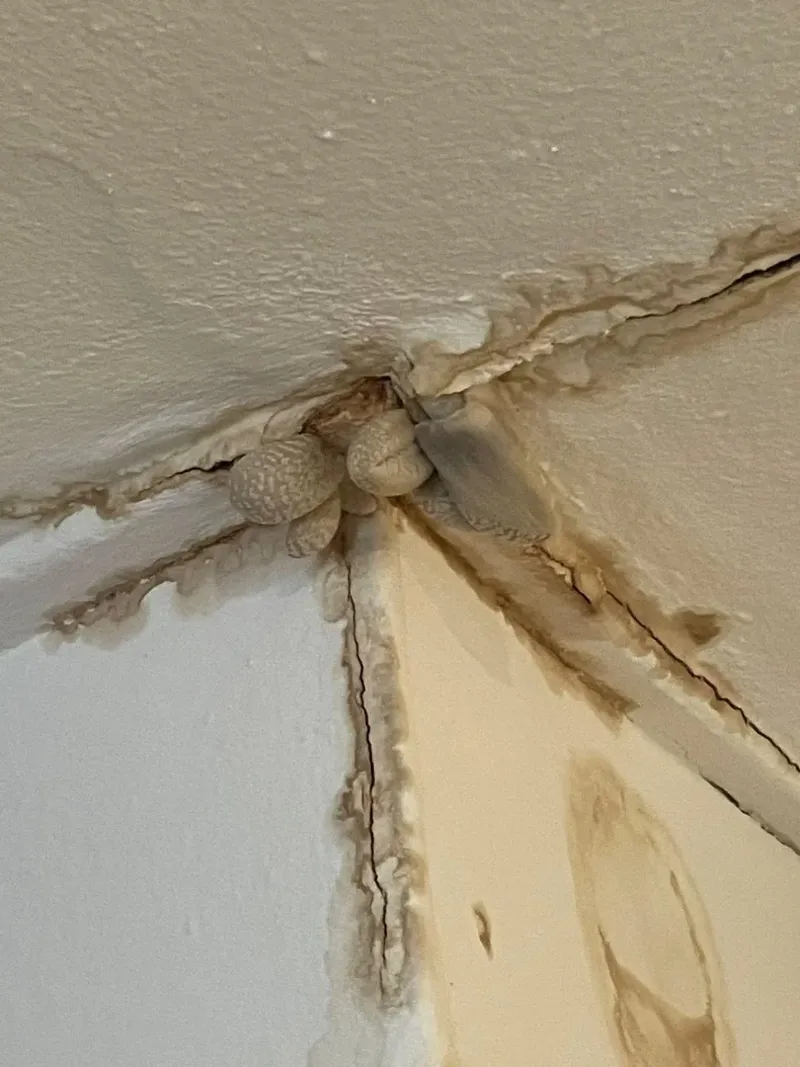
Signs Your Ceiling Leaking When It Rains Is a Roof Problem
A ceiling leaking when it rains is the classic roof leak sign. Still, not every stain after a storm comes from the roof. Here’s how to tell. Older roofs nearby lead to plenty of ceiling repair in Lomita after storms too.
- It shows up during or right after rain. Plumbing leaks don’t care about the weather.
- It’s near an outside wall or a roof feature. Think vents, skylights, chimneys and valleys.
- It’s on the top floor. Roof water rarely skips a floor.
- It dries out between storms. Then it grows again with the next rain.
- The attic shows dark spots. Look for stained wood, rusty nails or damp insulation.
A stain that grows on a dry summer day points somewhere else. In that case, read about AC and water heater ceiling leaks. Attic condensate lines are a common culprit here.
Roof Leak or Plumbing Leak? How to Tell
A stain that grows only after rain is usually a roof leak. A stain that grows on dry days points to plumbing or an AC line.
- After rain only: the roof, flashing or a clogged gutter.
- Under a bathroom or kitchen: a supply line, drain or toilet seal.
- Near an attic air handler: an AC drain line, often in summer.
- Top floor, near an outside wall: the roof edge or flashing.
Not sure? Our ceiling leak detection visit traces the water before anyone opens the ceiling.
| Clue | Roof leak | Plumbing leak |
|---|---|---|
| When it shows up | During or after rain | Any time, even in dry weather |
| Where the stain is | Top floor, near vents, chimneys or skylights | Below bathrooms, kitchens or pipe runs |
| How it changes | Grows after storms, dries between them | Stays damp or grows steadily |
| Who fixes the source | Roofer | Plumber |
Where Roof Water Usually Gets In
Most roof leaks start at a joint or an opening, not in the middle of the roof.
Roof Flashing
Roof flashing is the metal that seals joints around chimneys, walls and valleys. When it rusts, lifts or loses its sealant, water slips right under it.
Vent Pipe Boots
Plumbing vents poke through the roof. The rubber boot around them cracks in the sun. Our strong Southern California UV speeds that up.
Skylights
Skylights leak at the frame or the flashing around it. The stain usually appears on the ceiling right beside the skylight well.
Cracked Tiles and Worn Shingles
Tile roofs are common across the South Bay. Tiles crack when someone walks on them. The underlayment below them wears out with age.
Why the Roofer and the Ceiling Pro Are Different Trades
Roof leaks usually need two different trades. Most roofers don’t do interior drywall work. Most drywall crews don’t fix roofs.
So ceiling repair after a roof leak often needs two trades. The roofer seals the roof flashing, the vent boot or the tiles. We handle the inside. That includes drying the attic side, replacing soaked insulation, cutting out soft board and finishing the ceiling.
We can also help you figure out where the water entered. That gives your roofer a head start. Our guide on who to call for a ceiling leak explains how the two jobs fit together.
One tip. Ask the roofer to confirm the fix with a water test or after the next rain. Then we close up the ceiling with confidence.
Our Roof Leak Ceiling Repair Process
Every storm leak is a little different. This is the usual order.
- Confirm the roof is sealed. We wait for the roofer’s repair or a dry forecast.
- Check the attic. We look for wet insulation, stained wood and the water’s path.
- Measure moisture below. A meter shows how far the water spread in the ceiling.
- Remove what’s ruined. Soft drywall and wet insulation come out.
- Dry the framing. Joists and rafters must be dry before we close up.
- Replace insulation and board. New insulation goes in, then new ceiling board.
- Tape, texture and match. We blend the patch into the existing ceiling.
- Seal and paint. A stain blocking primer first, then finish paint.
If the ceiling is sagging, don’t wait for the roofer. Read our sagging ceiling help page. A bulge full of water can drop without warning.
Don’t Wait for the Next Storm
It’s tempting to skip roof leak ceiling repair and paint over the stain once the roof is fixed. The problem is what you can’t see.
- Wet insulation stays wet. It can hold moisture against the framing for weeks.
- Mold can start fast. The EPA advises drying wet materials within 24 to 48 hours.
- Board weakens. Each soaking softens drywall a little more.
- Stains bleed through. Regular paint won’t hide a water stain for long.
Before the rainy season, it’s worth a look in the attic. Check the areas around vents, skylights and chimneys. Small fixes in September beat big repairs in February.
Fix plumbing leaks and other water problems as soon as possible.
U.S. Environmental Protection Agency, A Brief Guide to Mold, Moisture and Your Home
How Roof Leaks Show Up on Different Torrance Roofs
Torrance has a mix of roof types, and each one leaks in its own way. Clay and concrete tile roofs, common in Hollywood Riviera and newer hillside homes, rarely fail at the tile itself. Water usually gets in where the underlayment beneath the tiles has aged out, so the ceiling stain can appear far from the cracked tile you can see.
Low-slope and flat roof sections over additions, porches and garages hold water longer after a storm. Ponding water finds small gaps at seams and drains, and the ceiling below often shows a wide, faint ring rather than a single drip. Asphalt shingle roofs on older tract homes tend to leak at vent pipe boots and around chimneys first.
Knowing the roof type helps us plan the ceiling side of the job. A slow tile underlayment leak often means wet insulation over a wide area, while a flashing leak is usually tight and easy to dry. Either way, we confirm the roof is sealed before we replace drywall, so the new ceiling stays dry through the next rainy season.
Signs of a Leaking Roof Above Your Ceiling
A leak in ceiling from roof damage often shows up days after the storm, not during it. Water soaks into insulation first, then spreads across the drywall. Look for a tan ring near exterior walls, a stain around a light fixture, or paint that bubbles after rain.
Other signs of leaking roof trouble are easier to miss. A musty attic smell, dark spots on roof sheathing or damp insulation all point to water getting in. If you see daylight through the roof boards from the attic, water can find that gap too.
Roof leaking repair should come first, then the ceiling. We confirm the roof is sealed, dry the cavity and replace any soft drywall. That order keeps you from paying for the same ceiling twice.
FAQ · Answers from local pros
Roof Leak and Ceiling Questions
Straight answers to what Torrance homeowners ask us after a storm.
These short answers cover what Torrance callers ask most. Office hours are Monday to Friday, 8:00 AM to 5:00 PM, and our emergency line is open 24/7. Give us a call
Should I call a roofer or a ceiling repair company first?
Call the roofer first to stop the water. You can call us at the same time. We can often pinpoint where the leak enters. That helps the roofer. We’ll schedule the ceiling once the roof is sealed.
Can I just paint over a roof leak stain?
Only if the board is dry and firm, and the leak is fixed. Even then, regular paint won’t block the stain. It needs a stain blocking primer first. See our page on brown ceiling stain removal.
Why does the stain only show up during heavy rain?
Small gaps often stay dry in light rain. Heavy, wind driven rain pushes water under tiles and flashing. That’s why a ceiling leaking when it rains hard may stay dry in a drizzle.
Does homeowners insurance cover ceiling damage from a roof leak?
It often covers sudden damage from a storm. It commonly excludes leaks from old age, wear or poor maintenance. Our guide to insurance claims for ceiling leaks covers what adjusters look for.
How long after a roof leak can you fix the ceiling?
As soon as the roof is sealed and the cavity is dry. Drying can take a few days. Closing up wet materials risks mold and a repeat stain.
Can a roof leak damage the ceiling without a visible stain?
Yes. Insulation can soak up water for a while before anything shows on the drywall. If you smell mustiness after rain or see a faint shadow on the ceiling, have it checked with a moisture meter before a full stain appears.
Will one storm cause mold in my ceiling?
One wet day doesn’t always lead to mold, but drywall and insulation that stay damp for more than a day or two can start growing it. Drying the area quickly after the roof is fixed is the best prevention.
How do I know if my ceiling leak is from the roof?
If the stain grows after rain and stays the same in dry weather, the roof is the likely source. Stains that grow when someone showers or runs water usually point to plumbing.
Should I fix the roof or the ceiling first?
Always the roof first. A new ceiling under an active roof leak will get damaged again with the next storm.
These related guides may also help: what to do in the first 24 hours after a ceiling leak, how long a wet ceiling takes to dry, ceiling condensation versus a real leak and ceiling repair in Old Torrance homes.
Free inspection · Torrance, CA
Put Your Ceiling Back Together After the Storm
The roofer stopped the water. Now let’s make the inside look right again.
We handle roof leak ceiling repair across Torrance and nearby South Bay cities. Call us for a free inspection. For everything we do, visit our ceiling water damage repair Torrance page.
Talk to a ceiling pro now
- Open 24/7 for emergencies
- Free inspection and written estimate
- Leak source found before we patch
- Serving all of Torrance and the South Bay
No obligation. Emergency calls answered 24/7.