Plaster Ceiling Repair for Older Torrance Homes
Older plaster ceilings are tough, but water loosens them from the lath. We secure what’s sound, rebuild what’s lost and keep the character of the room.
Can water damaged plaster be repaired?
Often, yes.
Call (424) 390-0246Free inspection · Emergency line 24/7
If most of the plaster is still firmly attached, loose areas can be secured and patched. Sections that crumble or pull away from the lath are replaced and blended in.
Key points
- 1Plaster is common in older homes around Old Torrance.
- 2Tap testing finds hollow, loose areas.
- 3Repairs are built up in layers to match the old surface.
Plaster Is Different From Drywall
Most homes built after the 1950s have drywall ceilings. Older homes are different. Many of them have plaster applied by hand over thin wood strips called lath.
Old Torrance has plenty of these homes. The original downtown was planned in the early 1910s, and some houses from that era still stand. Other plaster ceilings hide in homes from the 1920s through the 1940s across town.
Plaster ceiling repair in Torrance takes a different approach than drywall. Plaster is hard and heavy. It holds onto the lath with small blobs called keys. When water soaks in, those keys weaken and break. The ceiling can look fine from below while it quietly lets go.
If a plaster ceiling is bulging or dropping bits, treat it as urgent. See our sagging ceiling help page and keep people out of the room.
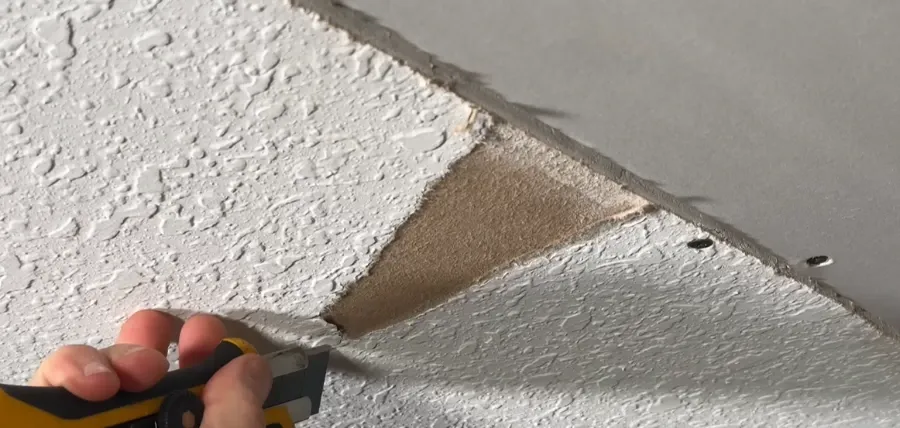
Older materials can hide asbestos. The EPA asbestos page explains why testing comes first.
How Water Damages a Lath and Plaster Ceiling
A lath and plaster ceiling handles a small drip better than drywall does. Plaster doesn’t turn to mush the same way. Still, water causes real trouble.
- Broken keys. Wet plaster loses its grip on the lath. The ceiling starts to sag or bulge.
- Swollen lath. Wood strips swell when wet, then shrink as they dry. That pushes plaster loose.
- Plaster cracks. New cracks often follow the lines of the lath or spread from the stain.
- Blistering paint. Old layers of paint bubble and peel as moisture escapes.
- Efflorescence. A white, chalky powder can form as minerals move to the surface.
Tap gently near the stain with your knuckle. A hollow sound often means the plaster has come loose from the lath. Don’t push on it.
Repair Options for Old Plaster Ceilings
There’s no single right answer. We check how much is loose and how much is missing. Then we ask how you want the room to look.
Reattach Loose Plaster
When the plaster is intact but loose, we can often screw it back to the lath with plaster washers. Then we skim over them so they disappear.
Patch Small Areas
For small holes or crumbling spots, we rebuild the area in layers. The goal is a patch that’s flush and as hard as the plaster around it.
Skim Coat the Surface
Fine plaster cracks and rough patches can be smoothed with a thin coat over the whole ceiling. This also hides old repairs.
Replace a Section With Drywall
Large damaged areas can be cut out and replaced with drywall. We shim it so it sits flush with the thicker plaster around it. Our page on drywall ceiling patches and panels explains that side of the work.
| Condition | Usual approach |
|---|---|
| Plaster firm, only cracks or stains | Seal, patch and blend |
| Plaster loose but intact | Reattach to the lath, then patch |
| Surface rough or uneven | Skim coat the area |
| Section crumbling or falling | Replace that section with drywall and blend the edges |
Our Plaster Ceiling Repair Process
Every old ceiling has its own story. Here’s the usual path.
- Stop the water first. The leak must be fixed before we start.
- Test before we cut. Older ceilings may contain asbestos. Testing is often wise before any demolition.
- Map the loose areas. We tap, measure moisture and mark what has let go.
- Secure what’s sound. Loose sections get reattached where possible.
- Remove what can’t be saved. We cut back to solid plaster with clean edges.
- Dry the lath and framing. Everything must be dry before we rebuild.
- Rebuild the surface. Plaster, setting compound or drywall, depending on the area.
- Finish and paint. We match the texture or smooth finish, then prime and paint.
Good plaster repair is slow work. Rushing it leads to cracks that come back within months.
Should You Replace the Whole Plaster Ceiling?
Sometimes. Many owners want to keep plaster because it’s solid, quiet and part of the home’s history. We respect that.
Replacement makes sense when:
- Most of the ceiling is loose. Reattaching everything costs more than new board.
- The lath is rotted. Repeated leaks can leave the wood too weak to hold anything.
- There’s a big remodel planned. New wiring or insulation may need the ceiling open anyway.
When only part of the lath and plaster ceiling is damaged, a repair usually wins. It’s often less money, less mess and keeps the room’s character. We’ll give you both options with a written estimate.
Our Torrance ceiling repair homepage breaks down typical costs for both paths.
Stains on Plaster Need the Right Primer
Water leaves brown rings on plaster just like on drywall. Old plaster also carries decades of paint, and some of it may be oil based.
Regular latex paint won’t hide a water stain. The stain bleeds right back through. We seal it first with a stain blocking primer. Then we repaint the whole ceiling plane so there’s no patchy halo.
If the plaster is firm and the stain is dry, that may be all you need. Our page on brown ceiling stain removal covers the sealing steps in detail.
Don’t saw, sand, scrape, or drill holes in asbestos materials.
U.S. Consumer Product Safety Commission, Asbestos in the Home
FAQ · Answers from local pros
Plaster Ceiling Questions
Answers to what owners of older Torrance homes ask us about water and plaster.
These short answers cover what Torrance callers ask most. Office hours are Monday to Friday, 8:00 AM to 5:00 PM, and our emergency line is open 24/7. Give us a call
Can a water damaged plaster ceiling be saved?
Often, yes. If the plaster is still intact, it can usually be reattached and patched. If large areas have fallen or the lath is rotted, those sections need to be rebuilt.
Why are cracks spreading across my plaster ceiling after a leak?
Water swells the lath and weakens the keys that hold the plaster. As things dry and shrink, plaster cracks spread. New cracks after a leak are a sign to have it checked.
Is it dangerous if my plaster ceiling is bulging?
It can be. Plaster is much heavier than drywall. A loose section can fall without warning. Keep people out of the room and call for an inspection.
Do plaster ceilings contain asbestos?
Some older ceilings and textures do. You can’t tell by looking. Testing is the only way to know. It’s often wise before any cutting or sanding. Our page on wet or stained popcorn ceilings explains how testing works.
How much does plaster ceiling repair cost?
It depends on how much is loose and how much must be rebuilt. Small patches often run a few hundred dollars. Larger areas and full skim coats cost more. We give you a written estimate after we see it.
Can you match an old smooth plaster finish?
Usually. We build the patch in thin layers and feather it wide. For large areas, a skim coat over the whole ceiling gives the most even result.
Free inspection · Torrance, CA
Keep the Character, Fix the Damage
Old plaster deserves careful work. We’ll secure it, rebuild it and make the stain disappear.
We handle plaster ceiling repair in older homes across Torrance and nearby South Bay cities. Call us for a free inspection. For everything we do, visit our Torrance ceiling repair homepage.
Talk to a ceiling pro now
- Open 24/7 for emergencies
- Free inspection and written estimate
- Leak source found before we patch
- Serving all of Torrance and the South Bay
No obligation. Emergency calls answered 24/7.