Who to Call for Ceiling Water Damage: A Torrance Guide
Most ceiling leaks need two trades. One stops the water. The other fixes the ceiling. Here’s how to tell who you need first.
Who do you call when water comes through the ceiling?
Usually two trades.
Call (424) 390-0246Free inspection · Emergency line 24/7
A roofer or plumber stops the water at its source. A ceiling repair pro then dries, rebuilds and refinishes the ceiling. Not sure where it starts? A ceiling pro can trace it first.
Key points
- 1Roof leaks go to a roofer. Pipe and fixture leaks go to a plumber.
- 2Condo leaks from a unit above may involve your HOA.
- 3Call your insurer early if the damage looks large.
The Short Answer
The honest answer to who to call for ceiling water damage is usually two people. First, the trade that stops the water. Then, the pro who dries and rebuilds the ceiling.
Call them in the wrong order and you pay twice. A beautiful new ceiling gets ruined by the same leak a month later. We see it all the time.
If water is coming down right now, don’t overthink it. Shut off the water, cut power to the area and call our 24/7 emergency ceiling leak repair line. We’ll help you figure out the rest.
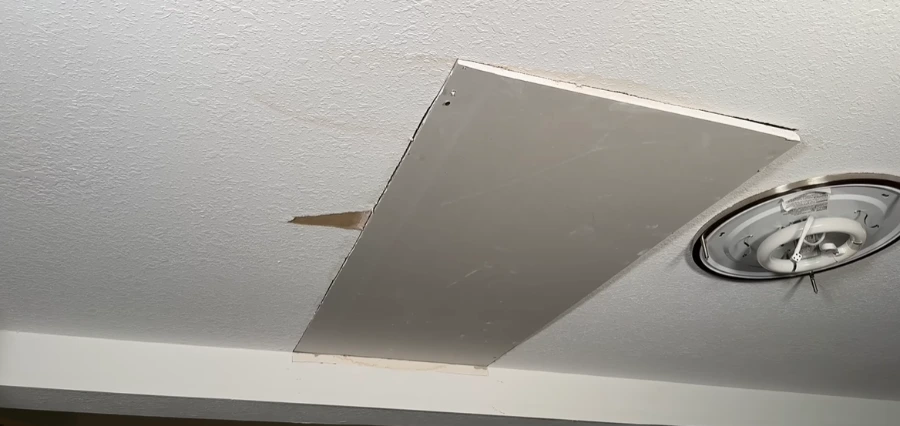
Roofer or Plumber? Match the Clue to the Trade
The stain itself usually tells you which trade to call. Start here.
| What You Notice | Likely Source | Call First | Then Call |
|---|---|---|---|
| Stain grows during or after rain | Roof, flashing, skylight, gutters | Roofer | Ceiling repair pro |
| Stain below a bathroom | Toilet seal, shower pan, drain, supply line | Plumber | Ceiling repair pro |
| Stain appears on hot days | AC condensate line, drain pan | HVAC technician | Ceiling repair pro |
| Stain near a water heater closet | Tank, valve or fittings | Plumber | Ceiling repair pro |
| Stain with no rain and no bathroom above | Pinhole leak in a supply line | Plumber | Ceiling repair pro |
| Stain in a condo with a unit above | Neighbor’s plumbing or fixtures | HOA or manager | Ceiling repair pro |
Still torn between a roofer or plumber? Check the timing. Rain points to the roof. Showers, flushing or constant dripping point to plumbing.
What Each Trade Does and Doesn’t Do
Knowing who does what saves you phone calls and surprise bills.
Roofer
Fixes shingles, tiles, flashing, vents and skylights. Most roofers don’t repair interior drywall or match ceiling texture. Our roof leak ceiling repair guide covers that part.
Plumber
Fixes pipes, fittings, toilets, drains and water heaters. A plumber may open a ceiling to reach a pipe, but usually won’t finish it.
HVAC Technician
Clears clogged condensate lines, replaces drain pans and fixes air handlers. They stop AC leaks, not the ceiling damage below.
Water Mitigation Company
Removes water and dries the structure with air movers and dehumidifiers. Many leave open holes behind and don’t do the finish repair.
Ceiling Repair Contractor
Dries, rebuilds, tapes, textures and paints the ceiling. A good ceiling repair contractor also confirms the area is dry with meters before closing it up.
Mold Specialist
Tests and removes mold when growth is visible or widespread. Small areas are often handled during the repair itself.
A handyman can handle a small, dry stain on a flat ceiling. For wet, sagging or textured ceilings, you want a specialist.
Who to Call for Ceiling Water Damage, Step by Step
Call in this order: stop the water, find the source, then repair the ceiling.
- Stop the water. Close the fixture valve or your main shutoff. Torrance Municipal Water takes calls at (310) 781-6900. After hours, Fire Dispatch handles water emergencies at (310) 781-7042. Some areas are served by Cal Water instead.
- Make it safe. Turn off power near the wet area and relieve any bulge with a small drain hole.
- Take photos. Before anything gets cleaned up, document the stain, the drip and the damage below.
- Call your insurance agent if it’s big. Sudden leaks are often covered. Early notice helps.
- Call the source trade. Roofer, plumber or HVAC technician, based on the table above.
- Dry it out. Small areas dry with fans. Larger ones need professional drying.
- Repair the ceiling. Once it reads dry, the ceiling gets rebuilt, textured and painted.
Want one call instead of five? We handle steps two, three, six and seven ourselves. We also help line up the right trade for the source.
Special Situations
Some leaks change who to call first, and in what order.
- You live in a condo. Call your HOA or property manager right away, and tell the owner above. Under California’s Davis Stirling Act, the HOA and owners split repair duties based on your CC&Rs.
- You rent. Tell your landlord in writing, with photos. California law requires landlords to keep roofs and exterior walls weatherproof.
- Your home was built before the mid 1980s. Test popcorn texture for asbestos before anyone cuts it. See our popcorn ceiling water damage guide.
- You see visible mold. A mold specialist may need to assess it before repairs start.
- You’re selling or in escrow. Call your agent first. Buyers will want the source fixed and documented.
Mistakes That Cost Homeowners Money
These are the patterns we see most often when people call us for a second repair.
- Painting over the stain before finding the leak
- Guessing between a roofer or plumber and hiring the wrong one
- Closing up a ceiling that still reads wet
- Letting a drying company leave without a plan for the holes
- Skipping photos, then struggling with the insurance claim
- Waiting weeks, which can turn a covered claim into an excluded one
Most of these come down to one thing. Knowing who to call for ceiling water damage before the pressure hits.
How to Choose the Right Ceiling Repair Contractor
Choose a contractor with an active California license, proof of insurance and a written, fixed price estimate. These quick checks separate solid pros from risky ones.
- Check the license. Look up any contractor on the CSLB license search. California requires a license for jobs of $1,000 or more in labor and materials. A license is also required for any job that needs a permit.
- Ask about insurance. General liability and workers’ comp protect you if something goes wrong.
- Limit the down payment. The CSLB says it should be no more than $1,000 or 10% of the price, whichever is less.
- Ask how they confirm dryness. The answer should include moisture readings, not “it looks dry.”
- Ask about texture matching. Ask for photos of similar jobs.
- Get it in writing. A written, fixed price estimate with the scope spelled out.
- Ask who fixes the source. A good pro won’t patch before the leak is stopped.
What IICRC Certification Means
IICRC certification is a training credential from the Institute of Inspection, Cleaning and Restoration Certification. This nonprofit sets industry standards for water damage cleanup and drying. You can look up certified firms on the IICRC locator. It is a useful sign for drying work. It does not replace a state contractor license for repairs.
How to Read Contractor Reviews
Reviews help most when they are recent and describe a job like yours. Look for mentions of leak tracing, drying and texture matching. Check that the business name and phone match across Google, Yelp and the CSLB record.
Fix plumbing leaks and other water problems as soon as possible.
U.S. Environmental Protection Agency, A Brief Guide to Mold, Moisture and Your Home
FAQ · Answers from local pros
Common Questions About Who to Call
Quick answers to what Torrance homeowners ask us most.
These short answers cover what Torrance callers ask most. Office hours are Monday to Friday, 8:00 AM to 5:00 PM, and our emergency line is open 24/7. Give us a call
Should I call my insurance company or a contractor first?
For a big leak, do both quickly. Stop the water first and take photos. Then call your agent. You’re usually expected to prevent further damage, so emergency help shouldn’t wait for an adjuster.
Can a plumber fix my ceiling too?
Some plumbers patch the opening they cut, but most don’t match texture or repaint. Plan on a ceiling pro for the finish work.
Will a roofer repair my water stained ceiling?
Usually not. Roofers fix the roof. The drywall, texture and paint are a separate job for a ceiling repair pro.
Who fixes a ceiling leak from my AC?
An HVAC technician clears the condensate line or replaces the drain pan. Then the ceiling below gets dried and repaired.
Can one company handle everything?
Some can coordinate it. We handle drying and ceiling repair, and help line up the roofer, plumber or HVAC technician you need.
What if the leak comes from the condo above me?
Notify your HOA or manager and the upstairs owner right away. Take photos. The CC&Rs usually decide who pays for what.
Who do I call when water is leaking through my ceiling?
Call a plumber if the water comes from pipes or a bathroom. Call a roofer if it only leaks in rain. Call an HVAC tech for an AC drip. Then call a ceiling repair company to dry and rebuild.
Who should I call for a leak in my bathroom ceiling?
Start with a plumber to find and fix the leak above. Then call us at (424) 390-0246 to dry, patch and paint the ceiling.
These related guides may also help: AC and water heater leaks through the ceiling, our ceiling leak FAQ, garage ceiling water damage, ceiling condensation versus a real leak and the South Bay areas we serve.
Free inspection · Torrance, CA
One Call Gets You Started
Call us when you’re not sure who to call for ceiling water damage. We’ll help you figure out the source, line up the right trade and get your ceiling back to normal.
We serve every Torrance ZIP code from 90501 to 90505, with emergency help day or night. Learn more about our ceiling water damage repair Torrance page.
Talk to a ceiling pro now
- Open 24/7 for emergencies
- Free inspection and written estimate
- Leak source found before we patch
- Serving all of Torrance and the South Bay
No obligation. Emergency calls answered 24/7.