Water Heater Leak Through Ceiling? Act Fast and Do It Right
A water heater in the attic or upstairs can soak a ceiling fast. Here’s how to stop the water, what usually fails and how the ceiling gets repaired the right way.
What do I do if my water heater is leaking through the ceiling?
Shut off the cold water supply and the power or gas to the heater, then catch the water below.
Call (424) 390-0246Free inspection · Emergency line 24/7
Close the cold water valve on top of the heater. Turn off the breaker for electric units or set gas units to off. Then call a plumber for the heater and a ceiling pro for the damage.
Key points
- Shut off water and power first
- Keep people out from under a sagging ceiling
- Dry the ceiling fully before repairs
Why Water Heater Leaks Do So Much Ceiling Damage
Most water heaters sit in a garage. But in some South Bay homes, condos and additions, they’re installed in the attic, a closet upstairs or above a living space. When one of those fails, gravity does the rest.
A water heater leak through ceiling drywall is different from a roof leak. It doesn’t stop when the rain stops. A tank can keep feeding water until someone shuts it off, which is why these leaks can soak a ceiling in hours.
The good news is that most of the damage can be repaired once the water is stopped and the area is dried properly.
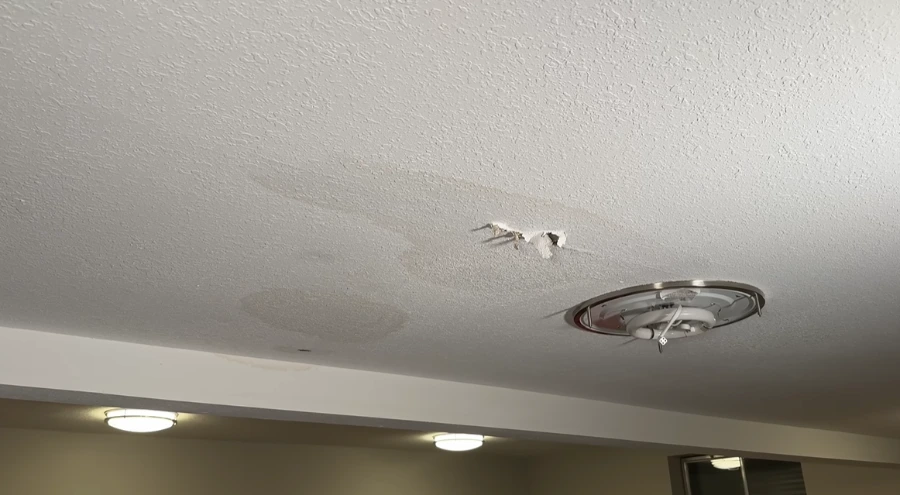
Shut It Down: The First Five Minutes
Find the cold water supply valve, usually on a pipe at the top of the heater, and turn it off. If you can’t reach it, shut off the main water valve to the house.
Turn off the energy source. For electric heaters, switch off the breaker. For gas heaters, turn the control knob to off or pilot. Don’t touch electrical parts that are wet.
Then protect the room below. Move valuables, put down towels and buckets, and turn off any lights or fans near the wet ceiling. If the ceiling bulges, keep everyone out of that area.
What Usually Fails on an Attic Water Heater Leak
With an attic water heater leak, we usually find one of a few causes. Each one needs a slightly different fix from your plumber.
A Corroded Tank
Tanks rust from the inside over time. Once the tank itself leaks, it can’t be repaired and needs to be replaced.
Loose or Failed Connections
Supply lines and fittings can loosen or crack. These leaks often start as a slow drip and get worse.
A Relief Valve Discharge
The temperature and pressure relief valve can release water if pressure or heat gets too high, or if the valve itself fails.
Water Heater Pan Overflow
A water heater pan overflow happens when the drain pan fills faster than it drains, or its drain line is clogged or missing. Then water spills onto the attic floor and into the ceiling.
Drying the Ceiling Comes Before Repairing It
Water from a tank spreads across insulation and along joists. Even after the drip stops, the ceiling cavity can stay wet for days. Wet insulation is usually removed, and fans or dehumidifiers dry the framing.
We use moisture meters to confirm the area is dry before closing anything up. Rushing this step is the main reason ceilings grow mold or stain again later. Our guide on how long a wet ceiling takes to dry explains what to expect.
If the leak was large, a water mitigation company may handle drying first. We then take over for the rebuild.
Repairing the Ceiling After a Water Heater Leak
Once the area is dry, we cut out damaged drywall, check the framing and replace insulation. New board goes up, then tape, texture, stain blocking primer and paint.
Small stains with no softness may only need sealing and paint. Soft, sagging or crumbling drywall always needs replacing. We match your ceiling texture so the repair blends in.
If the heater sat over a hallway or bedroom, we can usually finish the ceiling in a few days after drying.
Is Water Heater Ceiling Damage Covered by Insurance?
Many policies cover sudden and accidental water damage, like a tank that suddenly bursts. They often don’t cover the heater itself or damage from a slow leak that was ignored.
Photograph everything before cleanup, save the old heater parts if your plumber removes them and call your insurer early. See our ceiling water damage insurance guide for more tips.
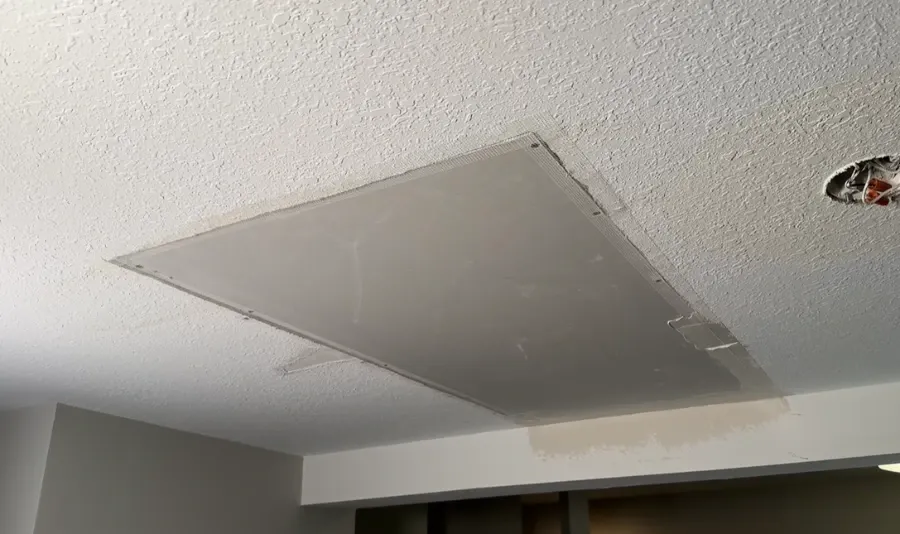
Water Heater Leak Through Ceiling: Hidden Damage to Check
A water heater leak through ceiling drywall rarely stays in one spot. Water spreads across the attic floor and soaks insulation well beyond the visible stain. That is why we check moisture in a wide circle around the leak.
We also look at framing and electrical. Light fixtures, fan boxes and junction boxes near the leak should be checked by an electrician if they got wet. For any attic water heater leak, we note whether the drain pan and line were working, so your plumber can correct it.
If water from the heater soaks the ceiling over a bedroom or hallway, plan for a short disruption. Most homeowners can stay home while we work. For more on safety, see whether it is safe to stay home during repairs.
Acting quickly on a water heater leak through ceiling drywall keeps the repair smaller and lowers the chance of mold. A repeat leak is rare once the pan, drain line and heater are fixed.
How to Prevent the Next Water Heater Leak
Make sure an attic or upstairs heater sits in a drain pan with a working drain line. Some homeowners add a leak sensor that sounds an alarm or shuts off water automatically.
Have a plumber check the tank, relief valve and connections every year or two. Many tank water heaters last roughly 8 to 12 years, so plan for replacement as yours ages.
If water has already come through, call (424) 390-0246. We’ll inspect for free, confirm the leak is fixed and restore your ceiling. Read more about our local ceiling water damage repair Torrance service.
FAQ · Answers from local pros
Common Questions
Short answers to what homeowners ask us most.
Office hours are Monday to Friday, 8:00 AM to 5:00 PM, and our emergency line is open 24/7. Give us a call
Can a leaking water heater make my ceiling collapse?
It can if enough water soaks the drywall. Wet drywall gets heavy and weak. If the ceiling sags or bulges, keep everyone out of the room and call right away.
Should I call a plumber or a ceiling repair company first?
Call a plumber first to fix or replace the water heater. A ceiling repair company can document the damage and plan drying and repairs.
How do I know if the water heater is the source?
If the stain sits below where the heater is installed and the leak continues regardless of weather, the heater or its lines are likely the cause. A plumber can confirm.
How long does it take to repair a ceiling after a water heater leak?
Drying often takes a few days. The ceiling repair itself usually takes one to three days depending on size and texture.
Do I need a drain pan under an attic water heater?
Yes. A drain pan with a working drain line is strongly recommended for heaters installed above living spaces. It catches small leaks before they reach the ceiling.
Can mold grow after a water heater leak?
Yes, if the area stays damp. Fast drying and moisture checks before closing the ceiling help prevent it.
Free inspection · Torrance, CA
Water Heater Soaked Your Ceiling?
Once the plumber stops the water, we take it from there.
Call (424) 390-0246 for a free inspection and written estimate anywhere in Torrance and the South Bay.
Talk to a ceiling pro now
- Open 24/7 for emergencies
- Free inspection and written estimate
- Leak source found before we patch
- Serving all of Torrance and the South Bay
No obligation. Emergency calls answered 24/7.