Sagging Ceiling Repair in Torrance, Made Safe Fast
A sag is a warning, not a cosmetic flaw. We make it safe, find out why it happened, and rebuild it so it stays flat.
Is a sagging ceiling dangerous?
It can be.
Call (424) 390-0246Free inspection · Emergency line 24/7
A sag that holds water or keeps growing can fall without warning. Keep people and pets out of the room and call right away. We make it safe, find the cause and replace the weak board.
Key points
- 1Water sags usually need new board, not pushing back up.
- 2Older plaster sags often come from failed lath keys.
- 3The leak must be fixed before the rebuild.
Why Ceilings Sag
Ceilings sag when water, failed fasteners or aging board weaken the drywall. Every sagging ceiling repair starts with that cause, because it decides the fix.
- Water weight. One gallon of water weighs about 8.3 pounds. A few gallons pooled on top of drywall adds up fast.
- Soaked drywall. Wet gypsum turns soft and loses strength. Once it deforms, it rarely springs back.
- Failed fasteners. Nails pop and screws pull through soft drywall. The panel starts to droop between joists.
- Thin board on wide spacing. Standard half inch wall board can sag over time when joists are 24 inches apart. Ceilings usually call for 5/8 inch board or a sag resistant ceiling panel.
- Heavy insulation. Thick blown insulation adds weight, especially after it gets wet.
- Old plaster. Plaster grips wood lath with “keys.” Water and age break those keys, and the plaster lets go.
- Framing problems. Rotted, cracked or overloaded joists. These need a structural fix before any drywall goes up.
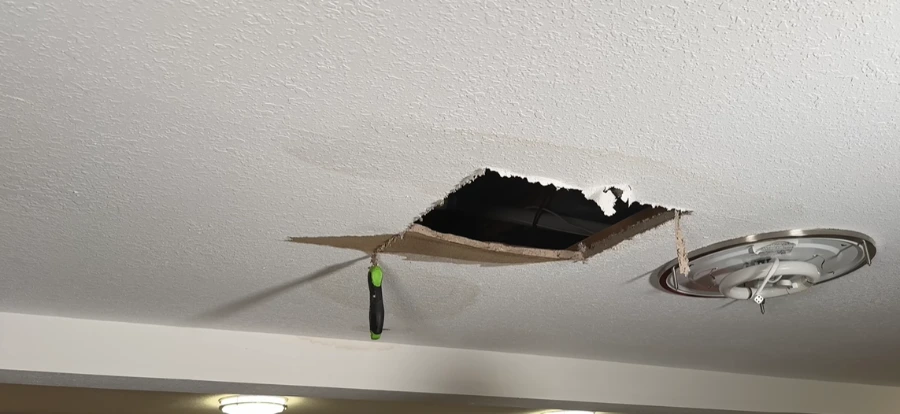
Wet materials should dry fast. The EPA moisture guide explains why speed matters after a leak.
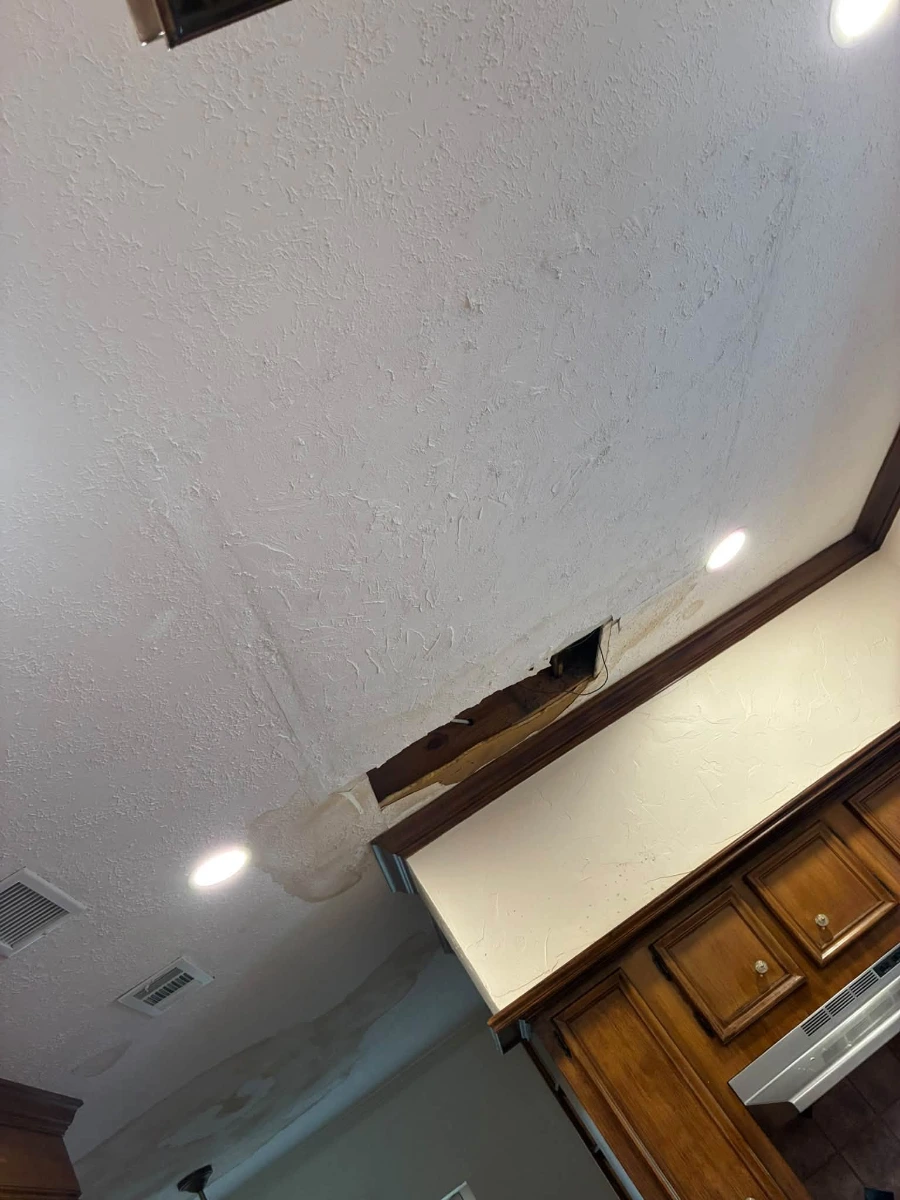
Is It Dangerous? Signs a Ceiling Collapse Is Close
Take any sag seriously. Some sags hold for months. Others drop in minutes. A full ceiling collapse can happen with little warning. These signs mean act now.
- A bulge that holds water or feels heavy
- A soft, spongy feel when pressed from below
- Cracks spreading out from the sag
- Tape seams splitting open
- Water dripping from the lowest point
- Popping or creaking sounds
- A sag that grows over hours or days
If your ceiling is sagging with water right now:
- Keep people and pets out of the room.
- Turn off the breaker for nearby lights and fans.
- Put a bucket under the lowest point.
- Standing to the side, poke a small hole in the lowest point with a screwdriver.
- Let it drain slowly, then call us.
Need help right away? Our 24/7 emergency ceiling leak repair is one call away.
Water Sag, Structural Sag or Age Sag?
Sags come from three sources: water, structure or age. Here’s how they usually differ.
| Type of Sag | What It Looks Like | Usual Cause | Typical Fix |
|---|---|---|---|
| Water sag | Bulge, stains, soft spot | Leak from roof, bathroom, AC or unit above | Drain, dry, replace the wet section |
| Fastener sag | Waves between joists, nail pops | Too few screws or failed nails | Refasten or replace panels |
| Age sag | Gentle droop across a room | Thin board, heavy insulation, humidity | Replace with ceiling rated board |
| Plaster sag | Cracks, loose chunks, bouncy feel | Broken plaster keys | Reattach, or overlay with drywall |
| Structural sag | Dip along a line, doors sticking | Damaged or overloaded joists | Framing repair first, then drywall |
How Our Sagging Ceiling Repair Works
We stop the leak, dry the area, then rebuild, in that order every time. Skipping a step is how sags come back.
- Make it safe. Power off, drain any trapped water, and support the area if needed.
- Find the cause. We trace the leak or check the framing before any repair.
- Remove damaged material. Soft drywall and wet insulation come out, cut back to the nearest joists.
- Check the framing. We look for rot, cracks and loose joists. Structural damage may need added framing, and sometimes an engineer or permit.
- Dry the cavity. Air movers and a dehumidifier run until the framing reads dry.
- Install the right board. We use 5/8 inch or sag resistant ceiling board, screwed at close spacing.
- Tape and finish. Joints get taped, coated and sanded smooth.
- Match the texture and paint. The new section blends into the rest of the ceiling.
Can a Sagging Ceiling Be Pushed Back Up?
Sometimes. It depends on why the ceiling is sagging in the first place.
It may be saved if:
- The drywall is dry and firm, and fasteners simply pulled loose
- It’s plaster with small loose areas that can be reattached with plaster washers and adhesive
- The sag is minor and the panel isn’t bent or cracked
It usually needs replacing if:
- The drywall got soaked and bent out of shape
- The paper face is torn or the core crumbles
- There’s mold on the back side
- The sag keeps growing
We’ll tell you honestly which camp you’re in. Replacing a small section often costs less than fighting a panel that won’t stay up.
Sagging Ceilings in Torrance Homes
In Torrance, most sags come from winter roof leaks and summer AC overflows. Winter storms, from mid October through late April, cause most roof related sags. In summer, attic AC drain pans overflow and soak the drywall below.
Older homes in Old Torrance often have plaster ceilings that sag as the keys fail. Postwar tract homes in North Torrance sometimes have popcorn texture, which needs asbestos testing before we cut. Garage ceilings sag too, often from poor venting and trapped heat and humidity.
We bring that local knowledge to every sagging ceiling we fix, from Walteria condos to West Torrance ranch homes.
What It Usually Costs
Most jobs depend on size, board type and whether framing is damaged. We price after a quick look.
| Type of Job | Typical Market Range |
|---|---|
| Refasten a small dry sag | Often a few hundred dollars |
| Replace a small wet section | About $300 to $700 |
| Larger section or full panel replacement | Often $1,200 and up |
| Popcorn ceiling section with testing | Often $1,800 and up |
| Framing repairs | Priced separately after inspection |
These are general market ranges, not quotes. Homeowners insurance often covers sagging ceiling repair when a sudden leak caused it. See our insurance claims guide.
Absorbent or porous materials, such as ceiling tiles and carpet, may have to be thrown away if they become moldy.
U.S. Environmental Protection Agency, A Brief Guide to Mold, Moisture and Your Home
Sag, Bow or Crack: What You’re Looking At
Not every uneven ceiling is the same problem. A true sag is a drooping area that dips lower than the surrounding ceiling, often with a soft or bulging center. In a leak, this usually means water is sitting on top of the drywall or the board has softened and is pulling away from the screws or nails.
A bow is a longer, gentler curve between two joists or along a seam. It can come from age, humidity or framing that has moved, and it is less urgent than a wet sag, though it still needs a look. A straight crack along a seam often means tape has let go, while a crack that spreads out from a stain usually points to water damage.
If the area is wet, soft or growing, treat it as an emergency, keep people out of the room and call. If it is dry and stable, take a few photos with a ruler or straight edge against the ceiling so you can see whether it changes over a few days.
FAQ · Answers from local pros
Sagging Ceiling Questions
What Torrance homeowners ask us most about sagging ceilings.
These short answers cover what Torrance callers ask most. Office hours are Monday to Friday, 8:00 AM to 5:00 PM, and our emergency line is open 24/7. Give us a call
Is it safe to stay in a room with a sagging ceiling?
Not if it holds water or feels soft. Keep people and pets out, especially at night. A dry, gentle droop is less urgent, but still get it checked soon.
Can I just screw it back up?
Only if the drywall is dry, firm and undamaged. Soaked or bent drywall won’t hold new screws well. It usually needs replacing.
How long does the repair take?
Drying usually takes 2 to 5 days after a leak. The repair itself often takes 1 to 3 days, since joint compound needs time to set between coats.
Does my garage ceiling sag for a different reason?
Often, yes. Garages get hot, and poor attic venting traps humidity. Over time the drywall softens and droops. Better venting is part of the fix.
Do I need a permit?
Simple drywall replacement usually doesn’t. Framing or structural repairs may. The City of Torrance Building and Safety Division makes the final call, and we check before larger jobs.
What if my ceiling is sagging but dry?
It could be failed fasteners, thin board or framing trouble. It’s less urgent than a wet sag, but it can still get worse. Have it looked at.
Can a sagging ceiling be pushed back up?
Not if it is water damaged. Wet drywall loses its strength and won’t hold its shape once it dries. We cut out the damaged section, dry the cavity and install new board, then tape, texture and paint to match.
Does a sagging ceiling always need full replacement?
No. Many sags only need the affected section replaced. Full replacement is usually only needed when the damage is widespread, the framing has moved, or an older plaster ceiling is failing in several places.
You may also want to read about ceiling cracks after a water leak, whether to repair or replace a water-damaged ceiling, ceiling repair in Central Torrance and ceiling repair in Old Torrance homes. For any other kind of ceiling damage, our team handles ceiling repair in Torrance from the first inspection to the final coat of paint.
Free inspection · Torrance, CA
Don’t Wait on a Sag
A sagging ceiling only goes one direction. Call before it becomes a mess on your floor.
We handle sagging ceiling repair across every Torrance ZIP code, with emergency help day or night. You’ll get a clear plan and a written price. Learn more on our ceiling water damage repair Torrance page.
Talk to a ceiling pro now
- Open 24/7 for emergencies
- Free inspection and written estimate
- Leak source found before we patch
- Serving all of Torrance and the South Bay
No obligation. Emergency calls answered 24/7.