Ceiling Leak After Rain: Why It Happens and How to Stop It for Good
Southern California doesn’t get much rain, so one storm can surprise you. Here’s why ceilings leak after rain, what to do right away and how to make sure it never comes back.
What should I do first about a ceiling leak after rain?
Catch the water, protect the room and get the roof checked before anyone repairs the ceiling.
Call (424) 390-0246Free inspection · Emergency line 24/7
Put a bucket under the drip, move valuables and turn off power to nearby lights. If the ceiling bulges, release the water safely at the lowest point. Then call a roofer and a ceiling pro.
Key points
- Roof first, ceiling second
- Photos help with insurance
- Dry the cavity before closing it up
Why Rain Finds Its Way Into Torrance Ceilings
A ceiling leak after rain almost always starts on the roof or at the edges of the house. Water gets in at a weak spot, runs along framing or insulation, then drips where gravity takes it. Before hiring anyone, you can check a contractor’s license with the California Contractors State License Board.
In the Los Angeles area, most rain falls between November and March. Long dry summers bake roofing materials, shrink sealants and fill gutters with leaves. When the first strong storm arrives, every small gap gets tested at once.
That’s why so many homeowners in Torrance, Redondo Beach and Lomita see a stain for the first time each winter. The problem was there all along. The rain just revealed it.
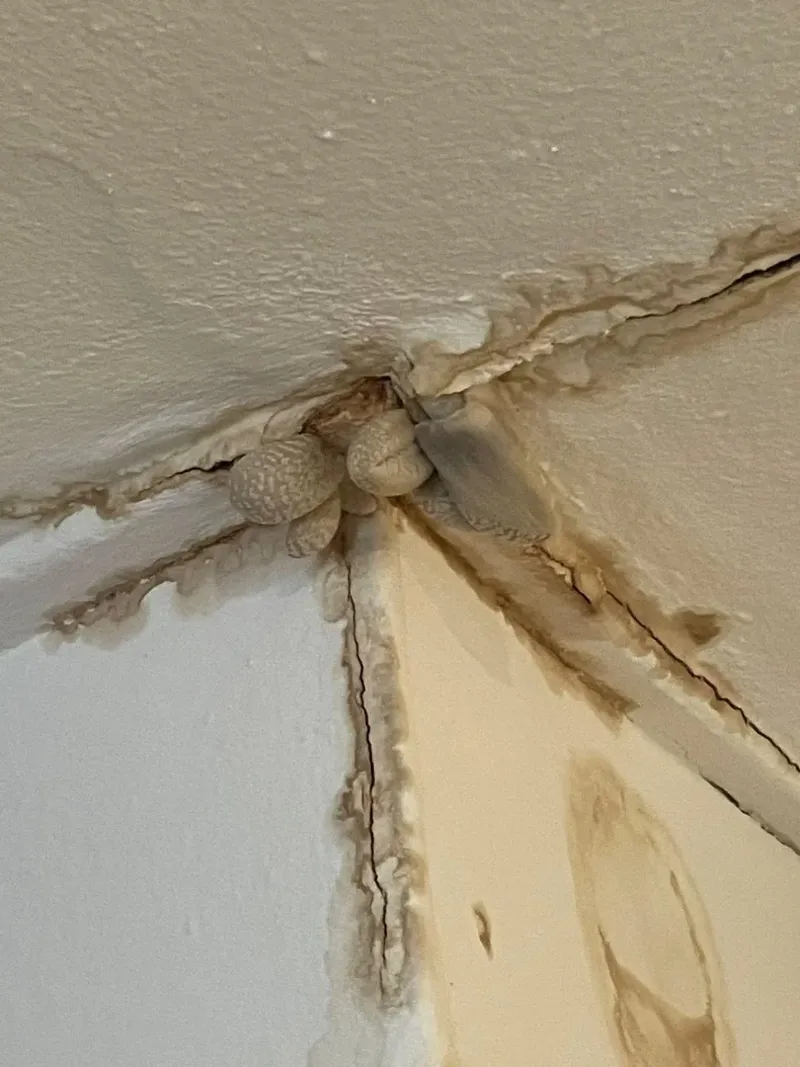
Common Reasons a Ceiling Is Leaking When It Rains
If your ceiling is leaking when it rains but stays dry otherwise, these are the usual causes. We see them again and again on South Bay homes.
Worn Flashing
Flashing is the metal that seals joints around chimneys, skylights, walls and roof valleys. Sun, heat and salt air near the coast can corrode it or loosen its seal.
Cracked Vent Pipe Boots
The rubber collars around plumbing vents dry out and crack over time. Water runs down the pipe and into the attic. This is one of the most common leaks we trace.
Clogged Gutters and Downspouts
When gutters overflow, water can back up under the roof edge and into the eaves. The stain often shows up near an exterior wall.
Flat Roof Sections
Additions, porches and garages often have low slope roofs. Water ponds there after a storm and finds tiny gaps at seams and drains.
Damaged Tiles or Shingles
A cracked tile or lifted shingle lets water reach the underlayment. On tile roofs, aging underlayment is often the real culprit.
What to Do the Moment You See Water
Stay calm and work through a short list. Put a bucket or towels under the drip. Move furniture, electronics and rugs out of the way. Turn off power to any light or fan near the leak at the breaker.
If the ceiling is bulging with water, it may be safer to release it in a controlled way. Poke a small hole at the lowest point with a screwdriver while standing to the side, with a bucket below. Never stand under a sagging ceiling.
Take clear photos of the stain, the drip and anything that got wet. Those photos help with insurance and with tracing the leak later. For a full checklist, see what to do in the first 24 hours.
How to Tell a Roof Leak From a Plumbing Leak
Timing is the best clue. A roof leak stain on ceiling drywall usually appears or grows during and right after rain. A plumbing leak shows up no matter the weather, often below a bathroom or kitchen.
Location helps too. Stains near exterior walls, chimneys and skylights point to the roof. Stains directly under a tub, toilet or shower point to plumbing.
If you’re not sure, a moisture meter and a look in the attic usually settle it. Our guide on who to call for ceiling water damage explains which trade to call first.
Why You Should Fix the Roof Before the Ceiling
It’s tempting to patch the stain right away. But if the roof still leaks, the next storm will ruin the new drywall and paint. You’ll pay twice.
The right order is simple. A roofer seals the entry point. The ceiling cavity dries out completely. Then the damaged drywall is replaced, textured, primed and painted.
Drying can take a few days. Wet insulation is usually removed, and fans or dehumidifiers speed things up. Closing a ceiling too early traps moisture and invites mold.
Does Insurance Cover a Ceiling Leak After Rain?
Many homeowners policies cover sudden water damage from a storm, such as a tree branch puncturing the roof. Damage from long term wear or poor maintenance is often excluded.
Every policy is different, so call your insurer and read the water damage section. Good photos, dates and repair estimates make the claim easier.
Our ceiling water damage insurance guide covers what adjusters usually look for.
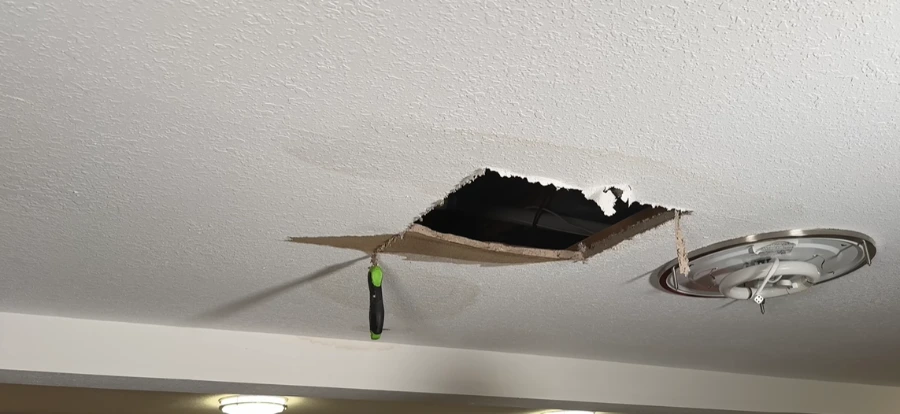
Ceiling Leaking When It Rains? Read the Pattern
When a ceiling is leaking when it rains, the pattern tells a story. A drip that starts minutes into a storm usually means a direct opening, like a lifted shingle or failed vent boot. A stain that appears hours later often means water traveled along framing first.
Wind direction matters too. If you notice a ceiling leaking when it rains from the south or west only, the weak spot is likely on that side of the roof or wall. Note the date, wind and rain intensity each time.
A roof leak stain on ceiling paint often shows a brown ring with a lighter center. That ring forms as water dries and leaves minerals behind. If you still see a ceiling leaking when it rains after a roof repair, ask the roofer to recheck flashing and the vent boots nearby.
How to Prevent the Next Rain Leak
A little prevention before each rainy season goes a long way. Clean gutters and downspouts in the fall. Have a roofer check flashing, vent boots and flat sections every year or two.
Look at your ceilings after the first storm, especially near exterior walls and under the attic hatch. Catching a new stain early keeps the repair small.
If a stain has already appeared, call (424) 390-0246. We’ll inspect for free, confirm the roof is sealed and repair the ceiling so it looks like nothing happened. Learn more about our local ceiling water damage repair Torrance work.
FAQ · Answers from local pros
Common Questions
Short answers to what homeowners ask us most.
Office hours are Monday to Friday, 8:00 AM to 5:00 PM, and our emergency line is open 24/7. Give us a call
Why does my ceiling only leak when it rains hard?
Light rain may not reach a small gap. Heavy rain and wind push water sideways and in larger amounts, so it finds openings in flashing, vents or under shingles.
Can a ceiling leak after rain cause mold?
Yes, if the wet area stays damp for more than a day or two. Drying the cavity quickly after the roof is fixed is the best way to prevent mold.
How long after the rain should I wait to repair the ceiling?
Wait until the roof is repaired and the ceiling cavity reads dry on a moisture meter. That often takes a few days to a week.
Should I call a roofer or a ceiling repair company first?
Call the roofer first to stop the water. A ceiling repair company can document damage and dry the area in the meantime, then repair the ceiling after the roof is sealed.
Can I just paint over a rain stain?
Not with regular paint. The stain will bleed through. It needs to be dry, then sealed with a stain blocking primer before painting.
Is a leaking ceiling after a storm an emergency?
It is if the ceiling is sagging, water is near electrical fixtures or the drip is heavy. Otherwise, contain the water and schedule repairs promptly.
Free inspection · Torrance, CA
Storm Left a Stain on Your Ceiling?
Get it checked before the next rain makes it bigger.
Call (424) 390-0246 for a free inspection and written estimate anywhere in Torrance and the South Bay.
Talk to a ceiling pro now
- Open 24/7 for emergencies
- Free inspection and written estimate
- Leak source found before we patch
- Serving all of Torrance and the South Bay
No obligation. Emergency calls answered 24/7.